
-
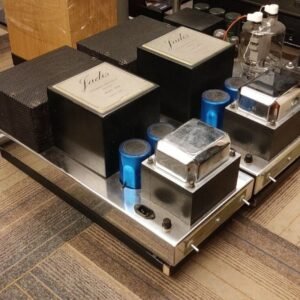
Jadis JA80 Tube Monoblocks
• Overview – The Jadis JA80 Tube Monoblocks, first released in 1985, are Class A tube power amplifiers using KT88 or KT90 valves, delivering renowned French craftsmanship, tonal richness, and dynamic authority for high-end loudspeakers.
• Tube Architecture – Each JA80 monoblock features hand-wired point-to-point construction, oversized transformers, and premium tubes, producing a fluid, harmonically saturated presentation with exceptional micro-detail and musical expressiveness.
• Power & Drive – Delivering approximately 60W of pure Class A power per chassis, the Jadis JA80 provides strong current delivery and excellent speaker control, making it suitable for complex or low-efficiency speakers.
• Build & Craftsmanship – The amplifiers showcase polished brass faceplates, heavy steel chassis, and meticulously selected components, ensuring durability, low mechanical resonance, and the signature Jadis aesthetic and sonic refinement.
• Dimensions – Each monoblock measures approx. 480 mm (W) × 230 mm (H) × 360 mm (D), accommodating large transformers and robust internal tube circuitry.
• Weight – Each unit weighs around 35–40 kg, reflecting the massive power supply architecture and premium transformer design essential for stable Class A tube performance.
For Prices LoginJadis JA80 Tube Monoblocks
For Prices Login -

Naim Audio NBL Floor Standing Speakers
• Naim Audio NBL Floor Standing Speakers – A precision-engineered transmission line loudspeaker from Naim, delivering exceptional timing, coherence, and full-range dynamics designed for uncompromising musical realism in high-end systems.
• Transmission Line Bass Loading – The Naim Audio NBL Floor Standing Speakers employ a complex internal folded line that extends bass depth and articulation while maintaining speed and low-frequency accuracy uncommon in floor-standing designs.
• Driver Configuration and Crossover – Features a 200 mm bass driver, 100 mm midrange, and 19 mm tweeter in a time-aligned vertical array, paired with a steep-slope crossover for seamless frequency integration and phase accuracy.
• Cabinet and Isolation Design – Each speaker cabinet is a sealed, resonance-controlled enclosure mounted on a decoupled base with an internal skeletal frame to minimize vibration transfer and coloration.
• Product Dimensions – Approximately 1,040 mm (H) × 270 mm (W) × 340 mm (D), designed for optimal dispersion and visual integration in reference two-channel systems.
• Weight – Each Naim Audio NBL Floor Standing Speaker weighs about 45 kg, providing mechanical stability and acoustic grounding essential for accurate low-frequency reproduction.
For Prices LoginNaim Audio NBL Floor Standing Speakers
For Prices Login -
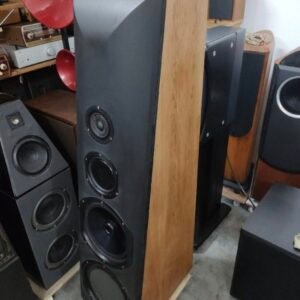
Thiel CS7
• Overview – Thiel CS7, released circa 1991, is a time- and phase-coherent floorstanding loudspeaker engineered by Jim Thiel, emphasizing first-order crossovers, precise imaging, and strict adherence to acoustic accuracy principles.
• Coherent Design Philosophy – The Thiel CS7 employs coaxial midrange/tweeter geometry and first-order slopes to preserve phase integrity, delivering exceptionally stable soundstaging and realistic transient behavior prized by experienced audiophiles.
• Low-Frequency Authority – A large isobaric woofer system extends bass response with control and depth, allowing the Thiel CS7 to reproduce full-range dynamics convincingly without reliance on subwoofers in well-matched rooms.
• Specifications – Nominal impedance is 4 ohms with demanding phase angles; sensitivity around 87 dB requires high-current amplifiers rated 200 watts or more for optimal control and dynamic headroom.
• Dimensions – Approx. 1210 mm (H) × 430 mm (W) × 560 mm (D). The substantial enclosure volume supports deep bass extension and minimizes cabinet resonance through rigid construction.
• Weight – Approximately 86 kg per speaker. The extreme mass reflects heavy bracing and driver motor assemblies essential for vibration control and reference-level low-frequency performance.
• Product Review – https://www.stereophile.com/floorloudspeakers/789/index.html
For Prices Login -

Naim Audio NAP135 (Pair)
• Naim Audio NAP135 Overview – The Naim Audio NAP135, introduced in the late 1980s, is a Class AB solid-state monoblock amplifier designed to deliver exceptional current drive, speed, and control, making it one of Naim’s most iconic power amplifiers.
• Monoblock Power and Precision – With a dedicated transformer and power supply per channel, the NAP135 achieves outstanding channel separation, dynamic authority, and stability, ensuring effortless control over demanding loudspeakers in complex musical passages.
• Legendary Naim Timing and Drive – The Naim Audio NAP135 is renowned for its PRaT (pace, rhythm, and timing), offering fast transients, articulate bass response, and natural musical flow that has cemented its cult status among Naim enthusiasts.
• Robust British Engineering – Built with a mechanically decoupled circuit layout, oversized toroidal transformer, and rigid aluminium chassis, the NAP135 provides long-term reliability, low noise performance, and exceptional mechanical stability.
• Dimensions – Approx. 160 mm (W) × 160 mm (H) × 300 mm (D), offering a compact monoblock footprint optimised for flexible placement in high-end Naim system racks.
• Weight – Around 12 kg per monoblock, reflecting the heavy transformer and rigid casework essential for stable power delivery and low mechanical resonance.
For Prices LoginNaim Audio NAP135 (Pair)
For Prices Login -
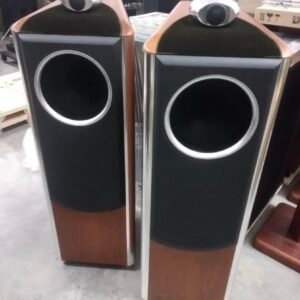
Tannoy TD10
• Classic Dual Concentric Design – Tannoy TD10, released in the mid-1990s, features the renowned Dual Concentric driver, delivering point-source coherence, precise imaging, and natural tonal balance prized by experienced audiophiles.
• Coherent Soundstage Performance – The Tannoy TD10 excels in phase accuracy and timing, producing a holographic stereo image with stable center focus, realistic scale, and effortless musical flow across diverse listening genres.
• High Sensitivity Efficiency – Designed for compatibility with both tube and solid-state amplification, this loudspeaker offers high sensitivity and controlled impedance, allowing dynamic expression even with moderate-powered amplifiers.
• Specifications – Nominal impedance is 8 ohms with sensitivity around 92 dB, using a 10-inch Dual Concentric driver, wide frequency response, and front-ported cabinet for controlled low-frequency extension.
• Dimensions – Approx. 1,000 mm (H) × 360 mm (W) × 340 mm (D), providing a substantial cabinet volume optimized for bass authority while remaining suitable for medium to large listening rooms.
• Weight – Each speaker weighs approximately 32–35 kg, reflecting robust cabinet construction designed to minimize resonance and support stable, vibration-free driver performance.
For Prices LoginTannoy TD10
For Prices Login -
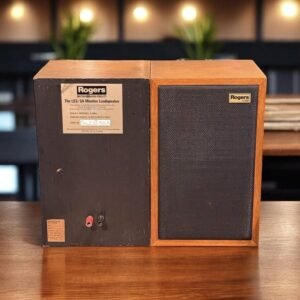
Rogers LS3/5A
• Rogers LS3/5A Overview – The Rogers LS3/5A, originally released in the mid-1970s for BBC broadcast use, is a legendary compact monitor known for its natural midrange, superb vocal clarity, and unmatched nearfield accuracy.
• BBC-Engineered Midrange Purity – Designed to reproduce speech and acoustic instruments with lifelike realism, the LS3/5A delivers exceptional tonal accuracy, refined articulation, and precise imaging unmatched by modern small monitors.
• Controlled and Coherent Presentation – The Rogers LS3/5A offers a warm, balanced character with smooth treble and tightly controlled bass, making it ideal for small to medium rooms and critical close-range listening.
• Classic Build and Legacy Craftsmanship – Featuring KEF T27 tweeters, B110 midbass drivers, and complex 13-element crossovers, each LS3/5A is hand-built to exact BBC specifications for consistent, reference-grade performance.
• Dimensions – Approx. 305 mm (H) × 190 mm (W) × 165 mm (D), maintaining the compact, sealed-box form factor ideal for accurate desktop or stand-mount placement.
• Weight – Around 4.9–5.3 kg per speaker depending on production era, contributing to cabinet rigidity and reduced resonance for cleaner midrange reproduction.
For Prices LoginRogers LS3/5A
For Prices Login -

Sonic Frontiers Line 3 Tube Preamplifier
• Overview – The Sonic Frontiers Line 3 Tube Preamplifier, launched in 1999, is a fully balanced, high-end tube preamp using premium 6DJ8/6922 valves, delivering exceptional transparency, harmonic richness, and reference-grade control for demanding audiophile systems.
• Tube Architecture – Featuring a sophisticated multi-tube gain stage, precision regulation, and dual-mono audio paths, the Sonic Frontiers Line 3 provides outstanding dimensionality, low noise, and authoritative dynamic contrast suited for high-resolution sources.
• Power & Control – The preamplifier employs an outboard power supply with extensive regulation, ensuring stable current delivery, reduced noise floor, and improved responsiveness across complex musical passages in the Line 3 system.
• Connectivity – Offering fully balanced XLR and high-quality RCA inputs/outputs, remote control, and modular internal boards, the Sonic Frontiers Line 3 integrates seamlessly into reference-level stereo setups requiring flexibility and sonic refinement.
• Dimensions – Main chassis approx. 483 mm (W) × 152 mm (H) × 432 mm (D); external power supply approx. 483 mm (W) × 102 mm (H) × 330 mm (D), both built for robust rack integration.
• Weight – Main unit weighs about 18–20 kg, while the power supply adds approximately 15 kg, reflecting its heavy-duty transformers and substantial regulation stages.
For Prices LoginSonic Frontiers Line 3 Tube Preamplifier
For Prices Login -

Audio Research SP3 Preamplifier – Black Gold Faceplate
• Overview – The Audio Research SP3 Preamplifier – Black Gold Faceplate, released in 1973, is a tube preamplifier featuring a built-in MM phono stage and all-valve circuitry, widely regarded as one of Audio Research’s most influential designs.
• Legendary Tube Circuitry – Utilizing multiple 12AX7 and 6DJ8 vacuum tubes, the Audio Research SP3 Preamplifier – Black Gold Faceplate delivers exceptional harmonic richness, natural timbre, and remarkable musical engagement for analogue enthusiasts.
• Reference Analogue Performance – The Audio Research SP3 Preamplifier – Black Gold Faceplate is celebrated for its expansive soundstage, lifelike midrange reproduction, and highly resolving phono section, making it a sought-after vintage audiophile component.
• Specifications – All-tube preamplifier design, integrated MM phono stage, multiple line-level inputs, frequency response approximately 2Hz–100kHz, low distortion circuitry, tube-regulated power supply, RCA input and output connections.
• Dimensions – Approximately 483 mm (W) × 133 mm (H) × 286 mm (D), featuring the distinctive Black Gold faceplate and classic full-width chassis construction.
• Weight – Approximately 8–10 kg, reflecting substantial transformer construction, premium valve circuitry, and robust chassis engineering designed for long-term reliability.
For Prices Login -
Tannoy Stirling HW 1st Gen Speakers
• Overview – The Tannoy Stirling HW 1st Gen Speakers, released in 1985, are floorstanding loudspeakers featuring Tannoy’s renowned Dual Concentric driver technology, delivering point-source imaging and classic British musicality.
• Dual Concentric Technology – Utilizing a 10-inch Dual Concentric driver, the Tannoy Stirling HW 1st Gen Speakers provide exceptional phase coherence, precise imaging, and a natural tonal balance that has made vintage Tannoys highly sought after.
• Handcrafted Heritage Design – Built in Scotland with real wood cabinetry, the Tannoy Stirling HW 1st Gen Speakers combine traditional craftsmanship with efficient driver loading, producing effortless dynamics and engaging musical realism.
• Specifications – 2-way floorstanding design, 10-inch Dual Concentric driver, 8-ohm nominal impedance, sensitivity approximately 93 dB, frequency response around 40Hz–20kHz, recommended amplifier power 20–150 watts.
• Dimensions – Approximately 950 mm (H) × 430 mm (W) × 310 mm (D), offering a substantial cabinet volume that supports deep bass performance while remaining suitable for domestic listening rooms.
• Weight – Approximately 28–32 kg per speaker, reflecting robust cabinet construction, substantial driver assemblies, and extensive internal bracing for reduced resonance.
For Prices LoginTannoy Stirling HW 1st Gen Speakers
For Prices Login -

VTL Deluxe Stereo 120/50 Power Amplifier and VTL Maximal Preamplifier
• Tube Amplifier System Overview – The VTL Deluxe Stereo 120/50 Power Amplifier and VTL Maximal Preamplifier deliver classic vacuum-tube musicality with rich harmonic texture, wide dynamic expression and natural imaging for serious high-end analogue systems.
• Power Amplifier Performance – Using a Class AB push-pull circuit with EL34 or 6550 valves, the VTL Deluxe Stereo 120/50 Power Amplifier and VTL Maximal Preamplifier provide approximately 50–60W per channel, offering smooth mids, airy highs and excellent dimensionality.
• Preamplifier Transparency & Gain Structure – Featuring high-voltage tube gain stages and a minimalist signal path, the VTL Deluxe Stereo 120/50 Power Amplifier and VTL Maximal Preamplifier achieve low noise, superior tonal purity and engaging musical flow across vinyl and digital sources.
• System Synergy & Listening Behaviour – Designed to work together, the VTL Deluxe Stereo 120/50 Power Amplifier and VTL Maximal Preamplifier deliver coherent timing, fluid transient behaviour and a large holographic soundstage ideal for efficient or well-matched loudspeakers.
• Product Dimensions – Amplifier: approx. 483 mm (W) × 203 mm (H) × 381 mm (D). Preamplifier: approx. 432 mm (W) × 89 mm (H) × 330 mm (D), sized for stable rack integration.
• Product Weight – Amplifier weighs roughly 22–25 kg; preamplifier approx. 7–10 kg. Heavy transformers and rigid chassis designs provide superior mechanical damping and improved tube performance stability.
For Prices Login -
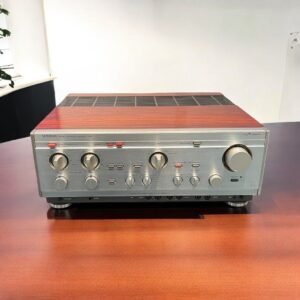
Luxman L550
• Product Overview – The Luxman L550, released in 1982, is a pure Class A solid-state integrated amplifier celebrated for its rich tonal warmth, precise control, and exceptionally musical presentation across diverse loudspeaker systems.
• Signature Luxman Sound – Known for its fluid midrange and refined harmonic structure, the Luxman L550 delivers highly engaging musicality that appeals to audiophiles seeking natural detail and effortless coherence.
• Classic Engineering – The Luxman L550 showcases meticulous Japanese craftsmanship, employing hand-selected components and a dual-mono layout to improve channel separation, enhance resolution, and reinforce tonal stability during dynamic passages.
• System Synergy – The Luxman L550 integrates seamlessly into both modern and vintage systems, offering consistent drive, stable performance, and excellent pairing flexibility with sensitive or moderately demanding speakers.
• Dimensions – Approx. 460 mm (W) × 170 mm (H) × 455 mm (D), designed to fit standard audio racks while maintaining adequate ventilation for Class A heat dissipation.
• Weight – Around 25 kg, featuring a robust transformer and solid chassis construction that enhances mechanical stability and minimizes resonance intrusion.
For Prices LoginLuxman L550
For Prices Login -

Naim Audio NAC 102 Pre-Amplifier and NAP 180 Power Amplifier
-
Naim Audio NAC 102 Pre-Amplifier and NAP 180 Power Amplifier – A revered Olive-series combo delivering Naim’s signature pace, rhythm and timing, recognized by seasoned audiophiles for inherent musical drive and coherence.
-
Class AB Power Expertise – The NAP 180 offers approximately 60 W per channel into 8 Ω, and 90 W into 4 Ω, with a robust 500VA transformer and twenty thousand µF reservoir capacitors for dynamic solidity.
-
Discrete Analog Control Stage – The NAC 102 features fully discrete transistor gain stages, remote operation, and comprehensive input flexibility—including optional phono boards—for detailed system integration.
-
Matched System Synergy – Designed as a true pre-/power pair, these units maintain low signal latency and strong grounding to preserve integrity when driving Naim-compatible loads and cables.
-
Product Dimensions – Each unit measures approximately 207 × 87 × 314 mm, enabling compact shelf integration or rack placement without sacrificing performance.
-
Weight – NAC 102 is roughly 2.5 kg, NAP 180 around 10 kg, allowing stable placement and excellent mechanical grounding for improved sonic accuracy.
For Prices Login -
-
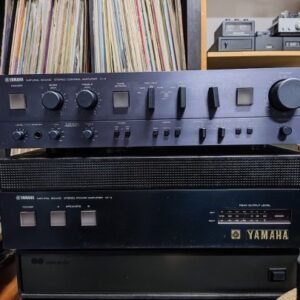
Yamaha C-4 Preamplifier and M-4 Power Amplifier
• Overview – The Yamaha C-4 Preamplifier and M-4 Power Amplifier, released in 1979, combine a solid-state analogue preamplifier with a Class AB solid-state power amplifier, delivering vintage Japanese engineering and audiophile-grade performance.
• Reference Vintage Combination – Designed during Yamaha’s golden era, the Yamaha C-4 Preamplifier and M-4 Power Amplifier offer exceptional flexibility, precise signal control, and a highly musical presentation suitable for both vinyl and digital sources.
• Advanced Analogue Engineering – The Yamaha C-4 features extensive MM/MC phono adjustments, while the M-4 provides high-current amplification with Yamaha’s Auto Class A capability, delivering refined detail and excellent loudspeaker control.
• Specifications – M-4 rated at 120W per channel into 8 ohms and 170W into 4 ohms, Class AB with Auto Class A operation, frequency response 10Hz–100kHz, C-4 includes MM/MC phono stage, multiple impedance and capacitance settings.
• Dimensions – C-4 measures approximately 435 mm (W) × 72 mm (H) × 320 mm (D), while the M-4 measures approximately 435 mm (W) × 165 mm (H) × 385 mm (D).
• Weight – The C-4 weighs approximately 7.5 kg, while the M-4 weighs approximately 18 kg, reflecting robust construction, substantial transformers, and premium analogue circuitry.
For Prices Login -

Audio Research LS3B Preamplifier and D120 Stereo Amplifier
• System Overview – The Audio Research LS3B Preamplifier and D120 Stereo Amplifier, released in the early 1990s, form a solid-state Class AB pairing known for exceptional transparency, dynamic authority, and the classic Audio Research house sound with precise tonal balance.
• High-Resolution Line Stage – The LS3B uses a fully balanced, low-noise circuit with wide bandwidth and premium discrete components, delivering excellent detail retrieval, stable imaging, and superior channel separation for accurate two-channel reproduction.
• Powerful Class AB Amplification – The Audio Research D120 Stereo Amplifier provides 120W per channel of clean, controlled Class AB power with high-current capability, enabling confident drive of demanding loudspeakers while maintaining composure and refinement.
• Exceptional System Synergy – Together, the Audio Research LS3B Preamplifier and D120 Stereo Amplifier offer fast transients, low distortion, and highly coherent musical flow, making the combination ideal for revealing loudspeaker systems in dedicated listening rooms.
• Dimensions – LS3B: approx. 480 mm (W) × 130 mm (H) × 330 mm (D). D120: approx. 480 mm (W) × 180 mm (H) × 430 mm (D). Designed to fit standard Audio Research rack spacing.
• Weight – LS3B: approx. 7 kg. D120: approx. 27 kg. The amplifier’s heavy transformer and robust chassis provide excellent mechanical damping for stable long-term performance.
For Prices Login -
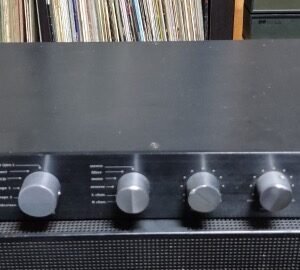
Klyne 6L Preamplifier
• Overview – The Klyne 6L Preamplifier, released in the early 1990s, is a solid-state reference preamplifier featuring pure analogue circuitry and optional phono capability, designed for exceptional transparency and low-noise performance.
• Reference Analogue Design – Designed by Stan Klyne, the Klyne 6L Preamplifier utilizes a minimalist signal path and precision-selected components, delivering outstanding resolution, channel separation, and musical accuracy without artificial coloration.
• Audiophile Performance – The Klyne 6L Preamplifier is highly regarded for its neutral tonal balance, expansive soundstage, and exceptional microdynamic detail, making it an ideal partner for high-resolution source components and power amplifiers.
• Specifications – Fully discrete solid-state analogue design, multiple line-level inputs, optional MM/MC phono modules, frequency response approximately 5Hz–100kHz, ultra-low distortion, high signal-to-noise ratio, dual-mono architecture.
• Dimensions – Approximately 483 mm (W) × 95 mm (H) × 280 mm (D), featuring a low-profile chassis designed to minimize vibration and electromagnetic interference within high-end audio systems.
• Weight – Approximately 5–7 kg, reflecting premium internal components, extensive power regulation, and solid chassis construction for reliable long-term operation.
For Prices LoginKlyne 6L Preamplifier
For Prices Login -

Yamaha NS-1000M
• Overview – The Yamaha NS-1000M, introduced in 1974, is a legendary studio monitor famed for its beryllium dome midrange and tweeter, delivering exceptional transparency, transient accuracy, and reference-level neutrality for critical listening.
• Beryllium Drivers – Featuring Yamaha’s iconic 3 cm beryllium tweeter and 8.8 cm beryllium midrange, the NS-1000M provides ultra-fast response, superb micro-detail, and minimal coloration—qualities that made it a worldwide studio standard.
• Controlled Bass Performance – Equipped with a 30 cm woofer in a rigid sealed enclosure, the NS-1000M achieves tight, articulate bass with excellent timing, ideal for both analytical and musical listening environments.
• Precision Monitor Heritage – The Yamaha NS-1000M remains sought after for its highly accurate soundstage, exceptional build quality, and ability to reveal upstream component changes with absolute clarity and honesty.
• Dimensions – Each speaker measures approximately 395 mm (W) × 675 mm (H) × 326 mm (D), offering a substantial enclosure optimized for neutrality and controlled resonance.
• Weight – Each cabinet weighs around 31 kg, contributing to its stable acoustic behavior and resistance to unwanted vibrations in demanding monitoring setups.
For Prices LoginYamaha NS-1000M
For Prices Login -

Adcom GFP-555 Preamp and GFA-5800 Power Amp
• Classic Adcom System – The Adcom GFP-555 Preamp and GFA-5800 Power Amp, introduced in the early 1990s, deliver robust solid-state performance with high-current Class AB amplification, offering strong dynamics and clean, authoritative control.
• High-Resolution Preamp Design – The GFP-555 features low-noise circuitry, precise tone controls, a high-quality phono stage, and multiple inputs, giving the Adcom GFP-555 Preamp and GFA-5800 Power Amp excellent system flexibility.
• Powerful Amplification – The GFA-5800, designed by Nelson Pass, provides 250W per channel into 8 ohms with massive current reserves. This ensures the Adcom GFP-555 Preamp and GFA-5800 Power Amp can drive difficult speakers with ease.
• Musical, Neutral Presentation – The pairing delivers fast transient response, wide soundstage, and neutral tonal balance, making it a sought-after vintage combo for both audiophiles and collectors seeking reliable performance.
• Dimensions – Preamp: approx. 432 × 89 × 330 mm. Power amp: approx. 432 × 203 × 483 mm. Designed to fit standard audio racks with deep shelves.
• Weight – Preamp weighs about 7 kg; power amp around 28–30 kg, thanks to its heavy transformer and large heat sinks for stable high-current operation.
For Prices LoginAdcom GFP-555 Preamp and GFA-5800 Power Amp
For Prices Login -

Naim SBL Speakers
• Overview – The Naim SBL Speakers, released in 1986, are a two-box floorstanding loudspeaker system featuring a unique mechanically grounded design, engineered for precise timing, speed, and musical coherence.
• Isobaric Loading Design – Utilizing an isobaric bass configuration with dual drivers, the Naim SBL Speakers deliver tight, controlled low-frequency performance while maintaining fast transient response and rhythmic accuracy.
• System Synergy – Designed to work optimally with Naim amplification, the Naim SBL Speakers excel in pace, rhythm, and timing, offering an engaging, dynamic presentation with strong midrange articulation.
• Specifications – 2.5-way isobaric floorstanding design, nominal 6-ohm impedance, sensitivity approximately 88 dB, frequency response around 40Hz–20kHz, recommended amplifier power 30–150 watts for optimal system matching.
• Dimensions – Each speaker measures approximately 900 mm (H) × 300 mm (W) × 300 mm (D), consisting of separate bass and mid/high enclosures for improved mechanical isolation and performance.
• Weight – Each speaker weighs approximately 25–30 kg, reflecting solid construction, dual-driver bass system, and rigid cabinet design for enhanced stability and reduced resonance.
For Prices LoginNaim SBL Speakers
For Prices Login -

Eminent Technology LFT16
• Planar Loudspeaker Design – Eminent Technology LFT16, released in 1991, is a full-range planar-magnetic loudspeaker delivering exceptionally fast transient response, low coloration, and expansive soundstage realism prized by serious audiophiles.
• Open-Baffle Transparency – The dipole radiation pattern minimizes box coloration, allowing Eminent Technology LFT16 to produce open, natural midrange clarity and lifelike spatial imaging when carefully positioned in dedicated listening rooms.
• High-End System Synergy – Designed for quality amplification, the speaker excels with stable, high-current amplifiers, rewarding careful matching with refined dynamics, controlled bass extension, and coherent large-scale musical presentation.
• Specifications – Nominal impedance is approximately 4 ohms, sensitivity around 86 dB, and recommended amplifier power ranges from 100 watts upward to fully exploit planar-magnetic dynamic capability.
• Dimensions – Each panel measures approximately 2030 mm high, 560 mm wide, and 50 mm deep, creating an imposing visual presence optimized for spacious listening environments.
• Weight – Each speaker weighs roughly 41 kg, with the substantial frame construction contributing to mechanical stability and consistent planar driver performance.
For Prices LoginEminent Technology LFT16
For Prices Login -
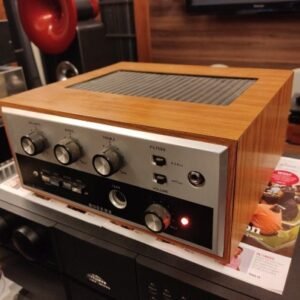
Rogers Cadet III Tube Integrated Amplifier
• Overview – The Rogers Cadet III Tube Integrated Amplifier, released in 1965, is a Class AB tube integrated amplifier featuring EL84 output tubes and built-in phono stage for classic British analogue performance.
• Classic Valve Amplification – Utilizing EL84 output valves and ECC83 preamp tubes, the Rogers Cadet III Tube Integrated Amplifier delivers warm midrange, smooth treble, and engaging musicality highly regarded by vintage audio enthusiasts.
• Vintage British Engineering – The Rogers Cadet III Tube Integrated Amplifier combines compact construction with minimalist circuitry, producing a natural tonal presentation ideal for efficient loudspeakers and intimate listening environments.
• Specifications – Approximately 10–12W per channel into 8 ohms, Class AB tube topology, EL84 output tubes, integrated MM phono stage, multiple analogue inputs, frequency response approximately 20Hz–20kHz.
• Dimensions – Approximately 305 mm (W) × 140 mm (H) × 230 mm (D), featuring a compact chassis layout with exposed transformers and accessible tube placement for maintenance.
• Weight – Approximately 7–9 kg, reflecting solid transformer construction and durable metal chassis design typical of classic British valve amplifiers from the 1960s.
For Prices LoginRogers Cadet III Tube Integrated Amplifier
For Prices Login -

Harman Kardon Citation 16 Power Amplifier
• Product Overview – The Harman Kardon Citation 16 Power Amplifier, released in 1976, is a solid-state Class AB design delivering high-current performance, wide bandwidth, and the authoritative control that defined Harman Kardon’s classic Citation series.
• High-Current Performance – Designed by Matti Otala, this amplifier is renowned for its low TIM distortion, fast transient response, and effortless dynamic swing, making it especially capable with demanding loudspeaker loads.
• Build & Sonic Character – The Harman Kardon Citation 16 Power Amplifier features a dual-mono layout with oversized power supply, producing a neutral, powerful, and tightly controlled sound that remains respected among vintage audiophiles.
• Specifications – Rated at approximately 150 watts per channel into 8 ohms and stable into 4 ohms, with wide frequency response and very low distortion for its era, emphasizing clean, unstrained power delivery.
• Dimensions – Measures approximately 445 mm (W) × 178 mm (H) × 406 mm (D), occupying a full-width chassis with substantial depth to accommodate its large transformer and heat dissipation requirements.
• Weight – Weighs roughly 27 kg, reflecting the heavy-duty power transformer, robust output stage, and solid steel chassis construction typical of high-end amplifiers from the Citation lineage.
For Prices LoginHarman Kardon Citation 16 Power Amplifier
For Prices Login -
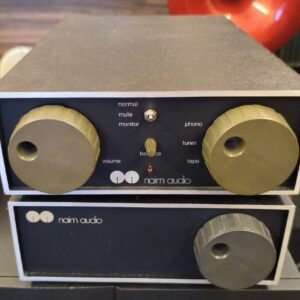
Naim Audio NAC42 Pre-Amplifier and NAP140 Power Amplifier
• Naim Audio NAC42 Pre-Amplifier and NAP140 Power Amplifier – This iconic pairing defines vintage British hifi precision, combining the NAC42’s finely tuned analogue front-end with the NAP140’s solid Class AB stereo power stage to deliver Naim’s signature pace, rhythm and timing.
• Class AB Power Stage Explained – The NAP140 delivers approximately 45 W per channel into 8 Ω (70 W into 4 Ω) with a quasi-complementary design and low-impedance multi-cap filtering, offering dynamic control with compact housing.
• Disciplined Analogue Control Module – The NAC42 features discrete transistor circuitry, minimal signal path architecture and compatibility with Naim’s external SNAPS/Hi-Cap power systems, enabling system upgrades while maintaining transparency and coherence.
• Upgrade-Ready Architecture – Both units are designed with modular serviceability and Naim ecosystem compatibility in mind, allowing the addition of Hi-Cap, SuperCap and later Naim upgrades for deeper musical refinement.
• Product Dimensions – Each unit measures approximately 207 × 87 × 314 mm (W × H × D), making them compact yet acoustically grounded components suitable for serious systems.
• Weight – The NAC42 weighs around 2.5 kg, while the NAP140 weighs roughly 5.5 kg, providing a stable mechanical platform and low vibration for optimum signal fidelity.
For Prices Login -

Alon II Speakers
• Overview – The Alon II Speakers, released in the mid-1990s, are American-designed open-baffle hybrid loudspeakers featuring a dynamic woofer and dipole mid/tweeter array for expansive, room-filling soundstage realism.
• Open-Baffle Design – Utilizing a dipole midrange and tweeter configuration, Alon II Speakers create exceptional spatial depth and imaging precision, minimizing box coloration while delivering natural, airy high-frequency extension.
• Bass Performance – A sealed dynamic woofer provides articulate, tuneful low-frequency response, blending seamlessly with the open midrange section to produce balanced tonality and impressive dynamic scale in medium-sized rooms.
• Specifications – 2-way hybrid dipole design, sensitivity approximately 87–89 dB, nominal 4-ohm impedance, recommended amplification 50–200 W, frequency response extending roughly 30 Hz–20 kHz, optimized for high-current solid-state amplification.
• Dimensions – Each cabinet measures approximately 39 in high × 12 in wide × 15 in deep, with an open rear mid/high section requiring thoughtful room placement for best performance.
• Weight – Each speaker weighs approximately 60–70 lbs (27–32 kg), reflecting solid cabinetry, substantial crossover components and robust driver assemblies.
• Product Review – https://www.stereophile.com/floorloudspeakers/471/index.html
For Prices LoginAlon II Speakers
For Prices Login -

Thorens TD160
• Turntable Overview – The Thorens TD160, introduced in 1972, is a legendary suspended–subchassis belt-drive turntable known for its low-noise performance, stable speed accuracy, and smooth, organic analog presentation cherished by vinyl enthusiasts.
• Suspended Subchassis Design – The Thorens TD160 uses a floating subchassis with precision springs to isolate the platter and tonearm from vibration, delivering cleaner transients, improved imaging, and a more natural midrange.
• Low-Noise Belt-Drive System – With its quiet AC motor and stable belt-drive mechanism, the TD160 provides excellent rotational consistency while minimizing rumble, making it a reliable platform for both vintage and modern cartridges.
• Upgrade-Friendly Architecture – The Thorens TD160 features a modular design, enabling improvements such as tonearm swaps, platter mats, external power supplies, and damping enhancements for long-term system growth and sonic refinement.
• Dimensions – Approx. 445 mm (W) × 150 mm (H) × 350 mm (D). Classic compact footprint makes it suitable for standard hi-fi racks and vintage furniture setups.
• Weight – Approx. 10 kg, offering solid mechanical stability that aids resonance control and supports the turntable’s suspended performance characteristics.
For Prices LoginThorens TD160
For Prices Login
