Small Room? Big Problem?
When people first step into the world of Hi-Fi, it’s natural to assume that more expensive speakers will always sound better. After all, higher price tags suggest better materials, more advanced engineering, and superior performance. While this can be true in the right environment, it often breaks down in one very common situation: small rooms.
In apartments, bedrooms, and compact living spaces — which are typical across Singapore and many parts of Asia, measuring 12-15 sqm (130-160sqft) with less than 2m from the speakers — expensive speakers frequently fail to deliver what buyers expect. This article explains why, and more importantly, how to avoid making costly mistakes when choosing speakers for smaller rooms.
The Room Is Part of the System (Whether You Like It or Not)
One of the most misunderstood aspects of Hi-Fi is that speakers do not work in isolation. The room they are placed in is effectively another component in the system, influencing bass, clarity, imaging, and overall balance.
Large, expensive, usually floorstanding speakers are usually designed with the assumption that they will be used in larger spaces. Their cabinet size, number of drivers, and bass output are meant to energise a room with sufficient volume to absorb and distribute that sound. When these same speakers are placed in a small room, the room simply cannot cope.
Instead of sounding powerful and controlled, the result is often excessive bass, blurred midrange, and listening fatigue — none of which reflect the speaker’s true capabilities.
Bass Is Usually the First Problem
The most common issue with expensive speakers in small rooms is bass overload.
High-end floorstanding speakers are often engineered to produce deep, extended bass. In a large room, this bass has space to develop naturally. In a small room, however, low frequencies bounce between walls, corners, and floors, creating what is known as room modes. These cause certain bass notes to become exaggerated while others disappear entirely.
To a beginner, this often sounds like:
Boomy or “thumpy” bass
Bass that overwhelms vocals
Music that sounds impressive at first, but tiring over time
Ironically, a smaller and less expensive speaker with limited bass extension can sound cleaner and more balanced in the same room.
More Drivers ≠ Better Sound in Small Spaces
Expensive speakers often use multiple drivers — additional woofers, midrange units, or complex driver arrays. While this can increase scale and dynamics in the right environment, it also increases the complexity of how sound interacts with the room. Some even come with dedicated sub-woofers.
In small rooms, multiple drivers can:
Interfere with each other acoustically
Create uneven sound dispersion
Make speaker placement far more critical
Instead of hearing a coherent soundstage, listeners may perceive sound as coming from different parts of the speaker, reducing realism and focus.
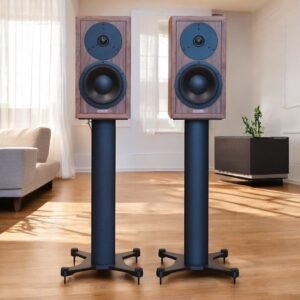
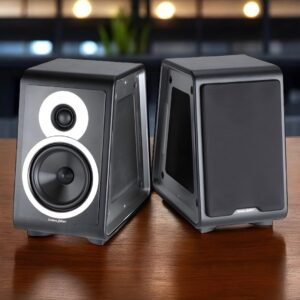
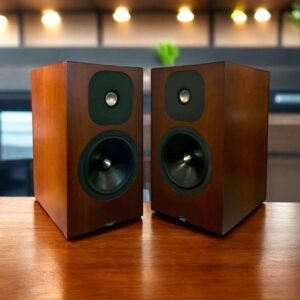
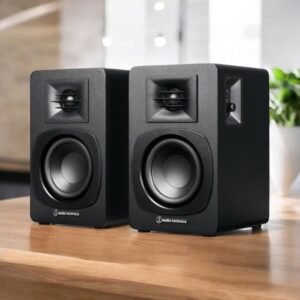
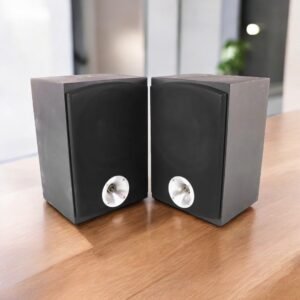
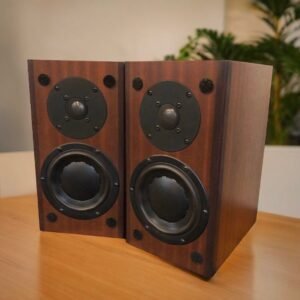
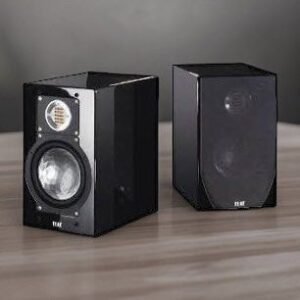
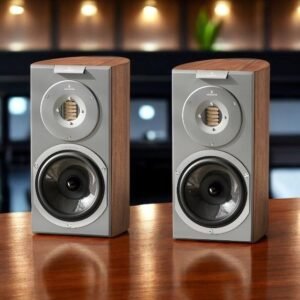
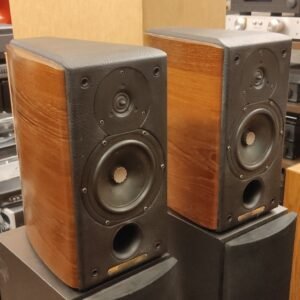
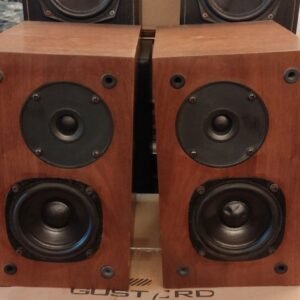
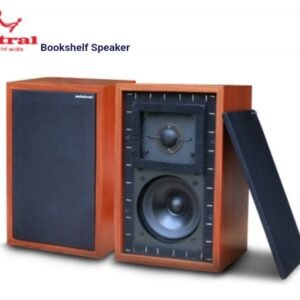
This is one reason why high-quality bookshelf speakers often outperform large floorstanders in small rooms. With fewer drivers and simpler dispersion patterns, they are easier to integrate into compact spaces.
Listening Distance Matters More Than Price
Another overlooked factor is listening distance.
Many expensive speakers are designed to be listened to from several metres away. This distance allows the sound from different drivers to blend together properly before reaching your ears. In small rooms, listeners are often seated much closer.
When you sit too close to large speakers:
The sound may feel disjointed
Vocals may appear too forward or recessed
Imaging can collapse
Smaller speakers, on the other hand, are often designed for near- to mid-field listening, making them better suited for apartments, study rooms, and bedrooms.
Placement Limitations in Real Homes
High-end speakers often require careful placement:
Significant distance from rear and side walls
Symmetrical positioning
Freedom from furniture constraints
In real homes, especially in Singapore apartments, this is rarely possible. Speakers are placed near walls, beside cabinets, or in shared living spaces.
When expensive speakers cannot be positioned correctly, their advantages disappear. Meanwhile, speakers designed for smaller rooms are often more forgiving and perform well even with limited placement options.
The Psychological Trap of Price
There is also a human factor at play. When someone spends a large amount on speakers, expectations skyrocket. Every flaw becomes more noticeable, and disappointment sets in faster if the sound doesn’t match the price.
This can lead to endless tweaking, upgrading, and frustration — when the real issue is simply that the speaker is wrong for the room.
Understanding this early saves buyers not only money, but also time and enjoyment.
What Actually Works Better in Small Rooms
In small rooms, the most satisfying systems are usually built around:
High-quality bookshelf speakers
Compact floorstanders with controlled bass
Speakers designed for near-field or small-space use
These speakers prioritise clarity, balance, and imaging over sheer scale. When paired with the right amplifier and positioned sensibly, they often deliver a more realistic and enjoyable listening experience than much larger, more expensive alternatives.
This is also where the pre-owned market becomes especially attractive. Buyers can access higher-quality compact speakers at lower prices without overspending on size and power they cannot use.
Platforms like SoundTribeAsia allow buyers to explore a wide range of pre-owned speakers suited for small rooms, helping them focus on fit and synergy rather than price alone.
How to Make a Smarter Buying Decision
If you are buying speakers for a small room, ask yourself:
How large is my listening space, realistically?
How far will I sit from the speakers?
Can I place them away from walls?
Do I usually listen at low or moderate volumes?
Answering these questions honestly will lead you toward better sound — often with less expensive speakers.
Final Thoughts
Expensive speakers are not bad speakers — but they are not universal solutions. In small rooms, their strengths are often compromised by space limitations, acoustics, and real-world listening habits.
Understanding this is not about lowering expectations. It’s about redirecting them intelligently. When speakers are matched to the room, budget becomes less important than balance, placement, and practicality.
The best Hi-Fi systems are not the most expensive ones. They are the ones that work in the space they live in, day after day, without effort or frustration.
For buyers in compact homes across Singapore and the region, this insight alone can prevent costly mistakes — and lead to far more satisfying listening in the long run.